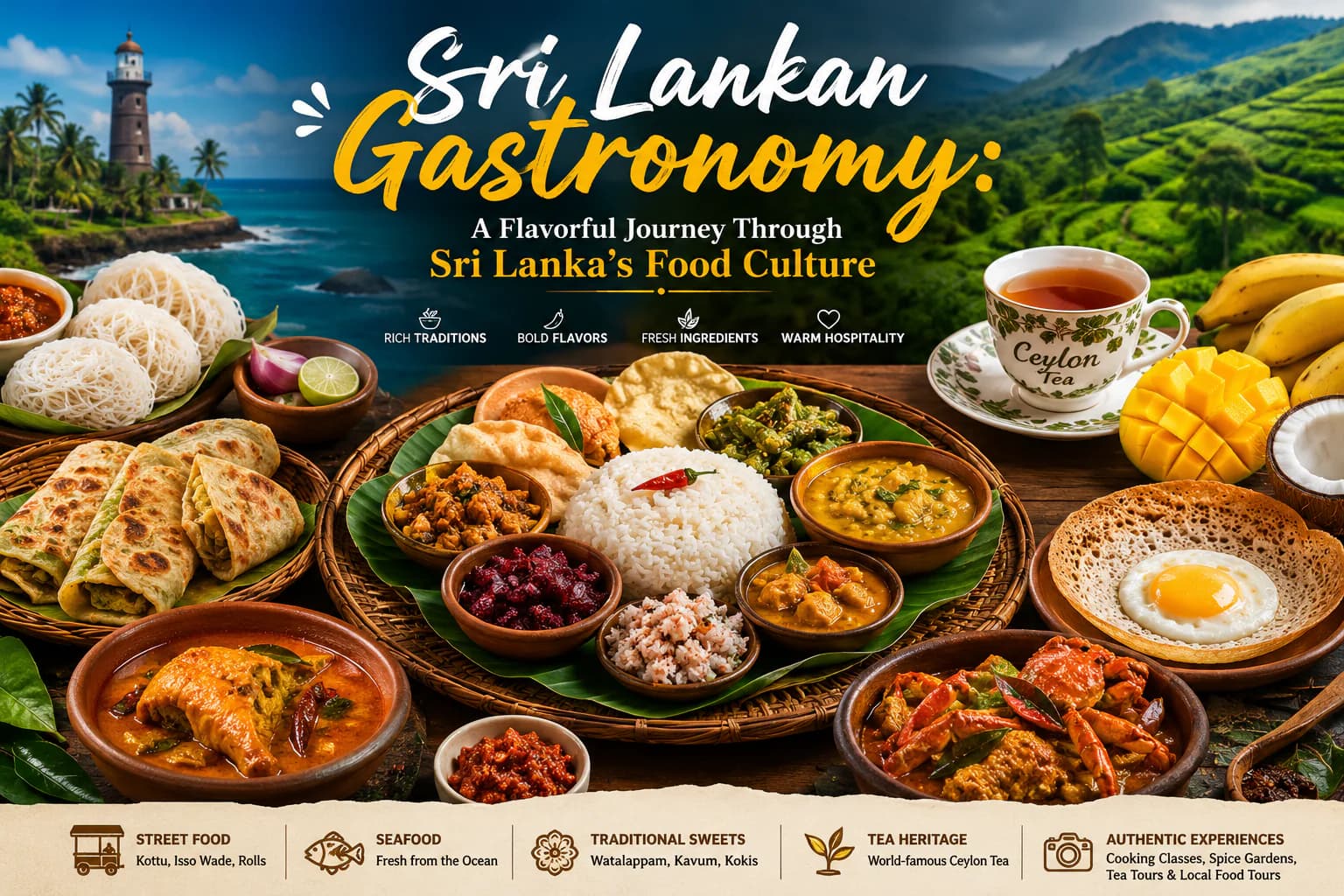
Sri Lankan Gastronomy: A Flavorful
Journey Through Sri Lanka’s Food Culture
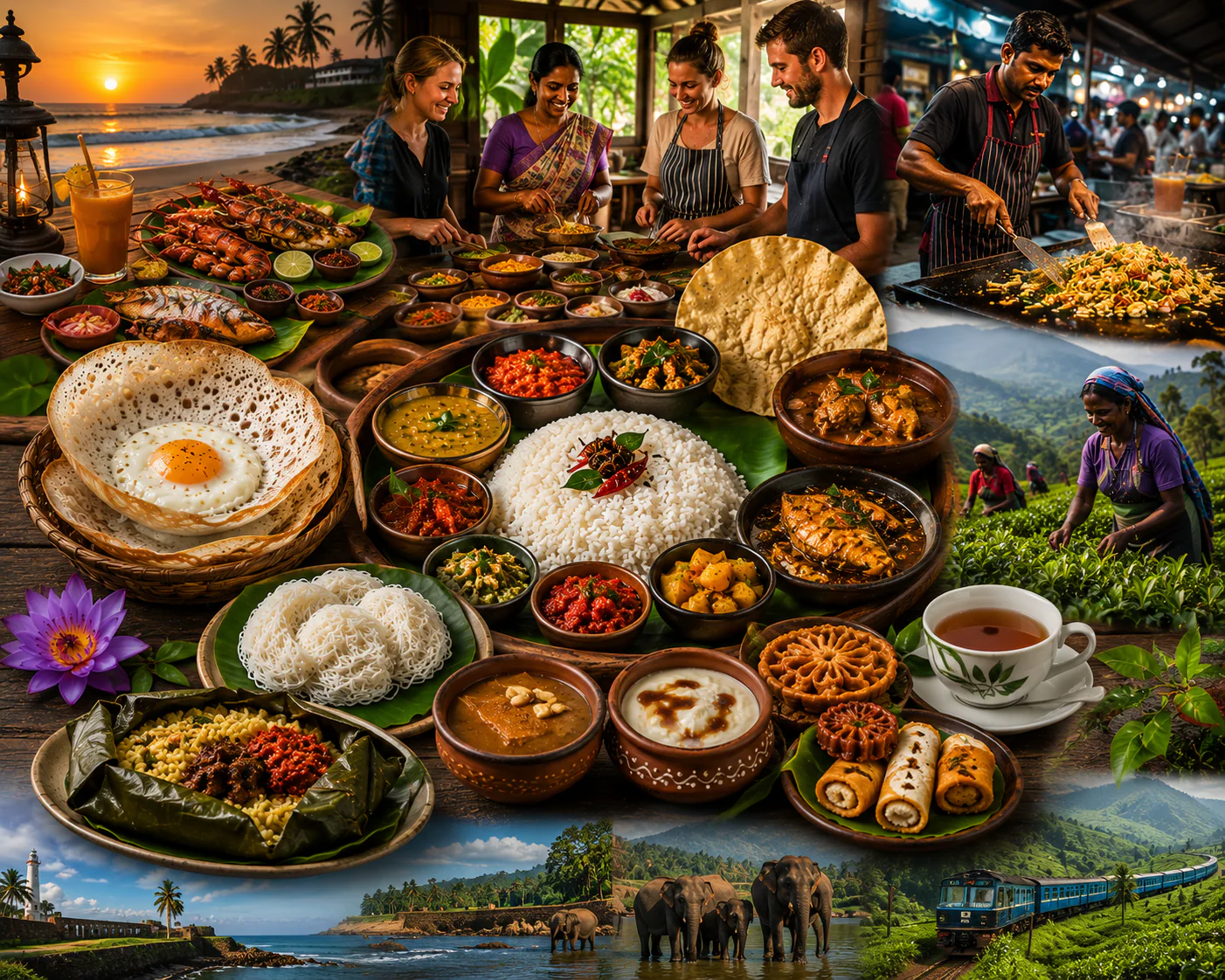
Sri Lanka is a small island, but its food culture is rich, colorful, and full of unforgettable flavors.
From spicy rice and curry to crispy hoppers, fresh seafood, tropical fruits, traditional sweets, and
world-famous Ceylon tea, Sri Lankan gastronomy is one of the best experiences for travelers
visiting the island.
Food in Sri Lanka is not only about eating. It is about family, culture, history, village life, coastal
traditions, spices, and warm hospitality. A simple home-cooked meal can tell you a lot about the
Sri Lankan way of life. Every dish has a story, and every region has its own taste.
Sri Lankan gastronomy is shaped by traditional dishes, local spices, fresh seafood, street food,
sweets, Ceylon tea, and authentic cooking experiences. Sri Lankan food is famous for rice and
curry, hoppers, kottu roti, string hoppers, pol sambol, seafood curry, watalappam, and buffalo
curd with kithul treacle. Many Sri Lankan dishes are spicy, especially curries, sambols, and
street food, but mild options are also available for tourists in hotels, restaurants, and guided
food tours.
What Makes Sri Lankan Cuisine Special?
Sri Lankan cuisine is built around rice, coconut, seafood, vegetables, spices, and fresh local
ingredients. It also carries influences from South Indian, Dutch, Portuguese, Malay, Arab, and
local village cooking traditions. This mix has created a unique food culture that feels authentic,
bold, and memorable.
One of the most special things about Sri Lankan gastronomy is balance. A meal can be spicy,
creamy, sour, sweet, and fresh at the same time. Coconut milk is used in many curries to create
a creamy texture, while spices such as cinnamon, cardamom, cloves, black pepper, turmeric,
chilli, mustard seeds, curry leaves, pandan leaves, and cumin add rich taste.
Sri Lankan food is also very fresh. Many dishes use local vegetables, tropical fruits, fresh
seafood, coconut, and homemade spice blends. This is why food in Sri Lanka feels natural and
full of character.
Rice and Curry: The Heart of Sri Lankan Food
Rice and curry is the most popular daily meal in Sri Lanka. It is eaten in homes, restaurants,
village kitchens, hotels, and local food shops across the country.
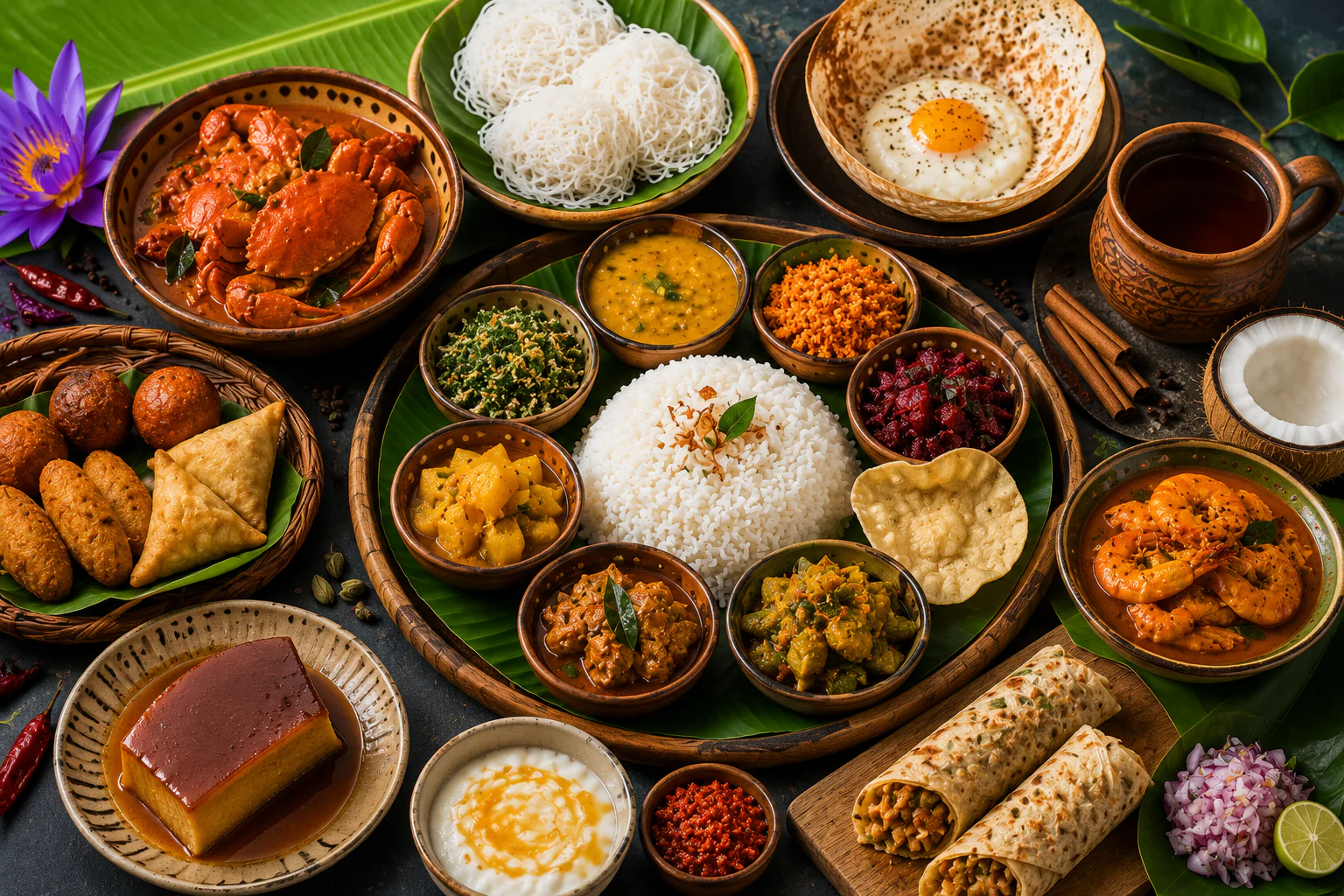
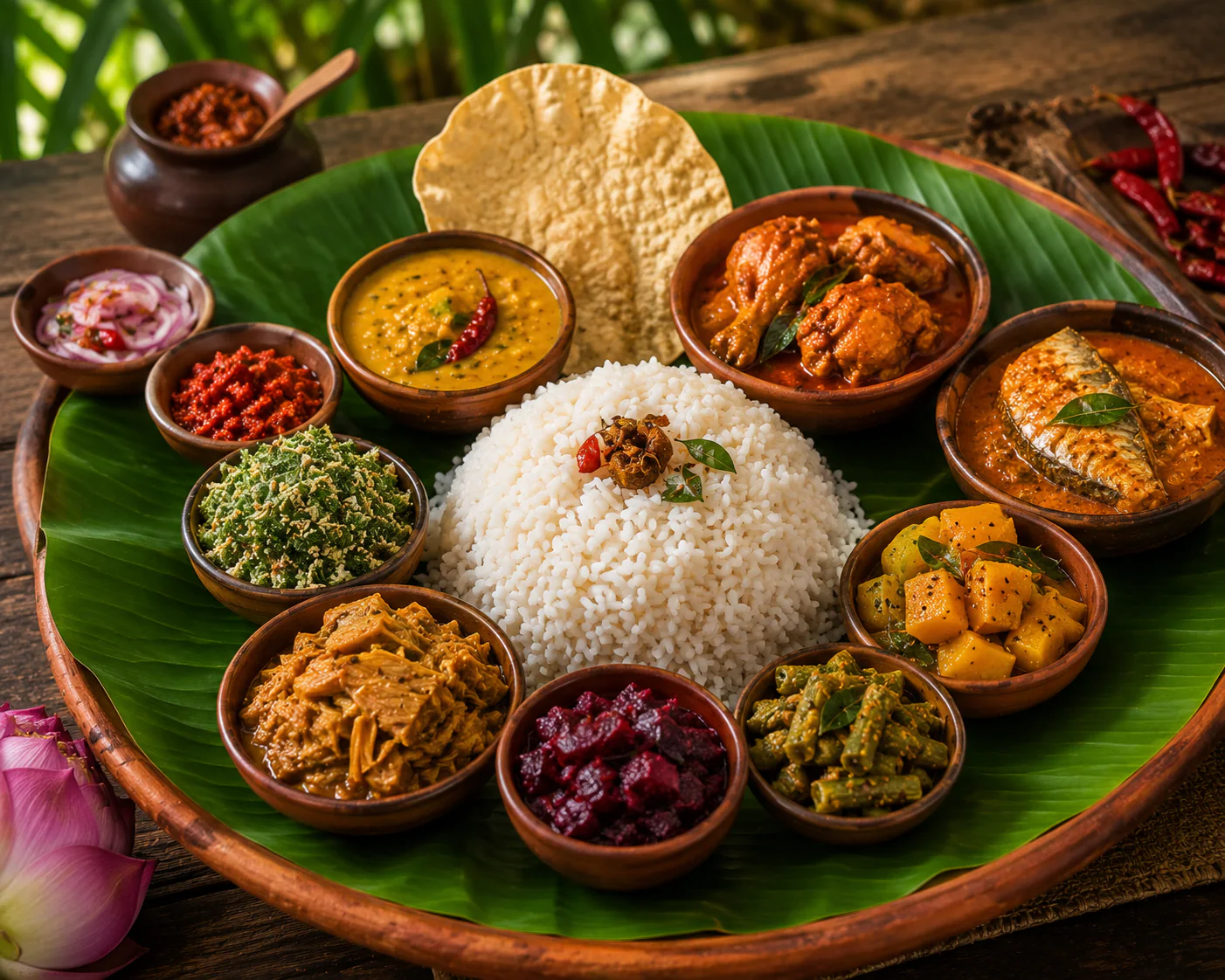
A traditional Sri Lankan rice and curry meal usually includes steamed white or red rice served
with several curries. These may include dhal curry, jackfruit curry, pumpkin curry, beetroot curry,
brinjal curry, fish curry, chicken curry, crab curry, or dry meat curry. It is often served with pol
sambol, papadam, mallum, sambol, and pickles.
For travelers, rice and curry is one of the best ways to experience real Sri Lankan food. It is
simple, filling, colorful, and full of local flavor.
Must-Try Traditional Sri Lankan Dishes
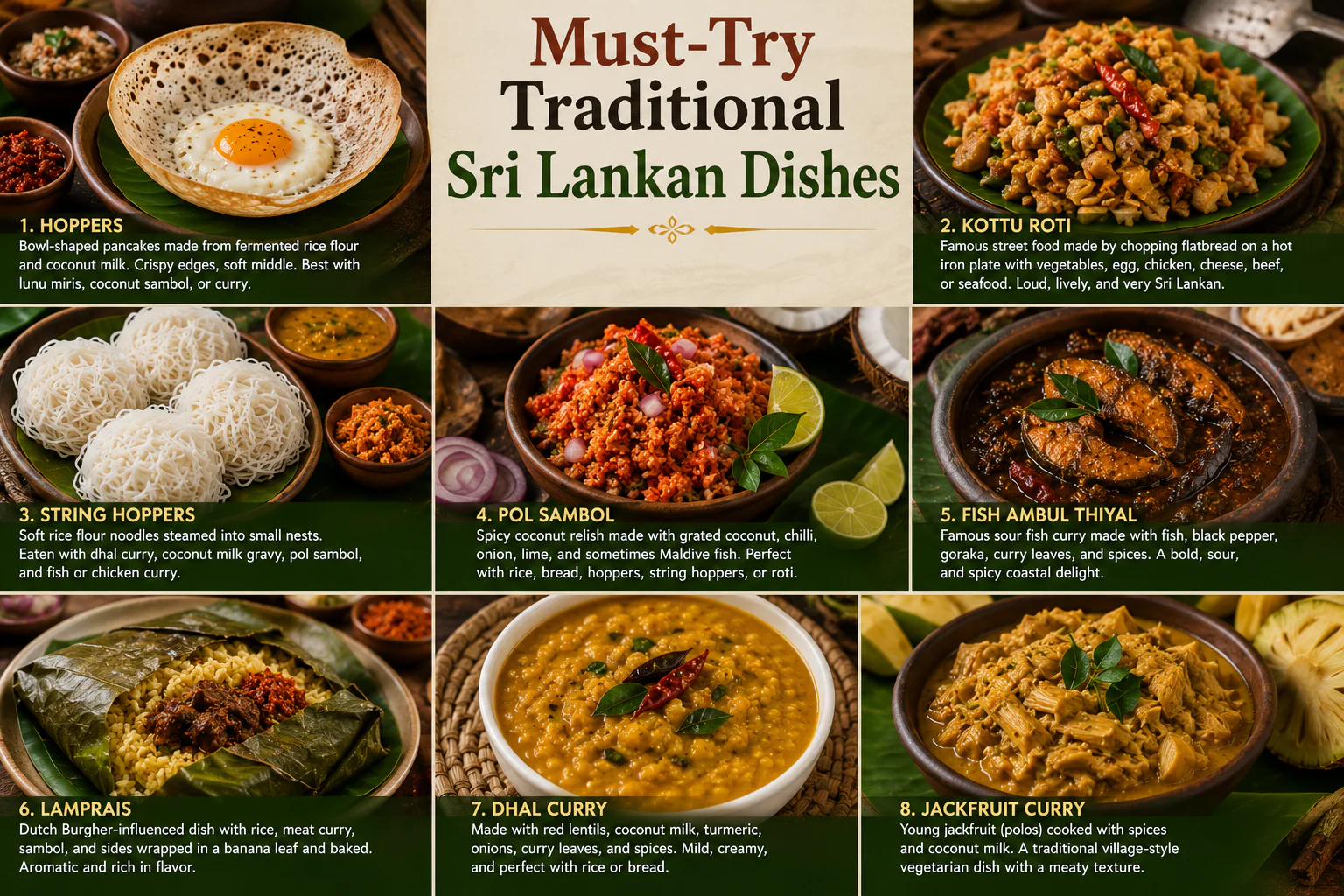
Hoppers
Hoppers, locally called appa, are bowl-shaped pancakes made from fermented rice flour and
coconut milk. They are crispy around the edges and soft in the middle. Egg hoppers are
especially popular for breakfast and dinner. They are usually eaten with lunu miris, coconut
sambol, or curry.
Kottu Roti
Kottu roti is one of the most famous street foods in Sri Lanka. It is made by chopping flatbread
on a hot iron plate with vegetables, egg, chicken, cheese, beef, or seafood. The sound of kottu
being made is part of the experience. It is loud, lively, and very Sri Lankan.
String Hoppers
String hoppers, also known as idiyappam, are soft rice flour noodles steamed into small round
nests. They are usually eaten for breakfast or dinner with dhal curry, coconut milk gravy, pol
sambol, and fish or chicken curry.
Pol Sambol
Pol sambol is a spicy coconut relish made with grated coconut, chilli, onion, lime, and
sometimes Maldive fish. It is one of the most loved side dishes in Sri Lanka and can be eaten
with rice, bread, hoppers, string hoppers, or roti.
Fish Ambul Thiyal
Fish ambul thiyal is a famous sour fish curry from Sri Lanka, especially popular in southern
coastal areas. It is made with fish, black pepper, goraka, curry leaves, and spices. The taste is
sour, spicy, and bold.
Lamprais
Lamprais is a Dutch Burgher-influenced dish made with rice, meat curry, sambol, and other side
dishes wrapped in a banana leaf and baked. The banana leaf gives the dish a special aroma
and rich taste.
Dhal Curry
Dhal curry is one of the most common dishes in Sri Lanka. It is made with red lentils, coconut
milk, turmeric, onions, curry leaves, and spices. It is mild, creamy, and perfect with rice, bread,
hoppers, or string hoppers.
Jackfruit Curry
Jackfruit curry is a traditional village-style dish. Young jackfruit, known as polos, is cooked with
spices and coconut milk until it becomes soft and flavorful. It is a popular vegetarian dish and
has a rich, meaty texture.
Sri Lankan Street Food and Short Eats
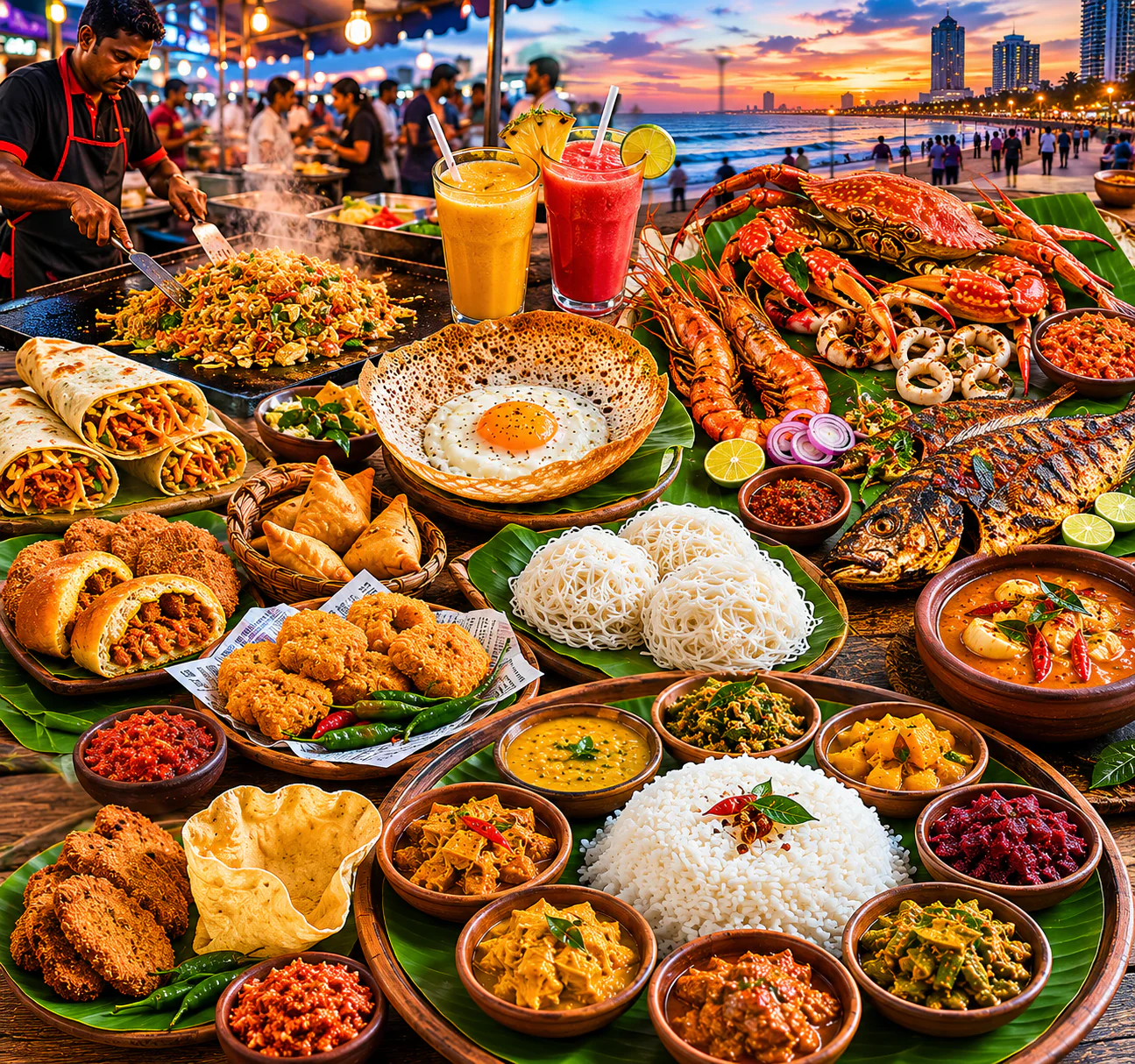
Sri Lankan street food is exciting, affordable, and full of flavor. In cities like Colombo, Kandy,
Galle, Negombo, and Jaffna, travelers can enjoy many local snacks known as “short eats.”
Popular short eats include vegetable roti, fish rolls, chicken rolls, cutlets, samosas, vadai, isso
wade, patties, and spicy buns. Galle Face Green in Colombo is one of the most popular places
to try isso wade, kottu, fresh juices, and seaside snacks.
Street food is one of the best ways to experience local life. It is casual, busy, colorful, and full of
energy. For food-loving travelers, a Colombo street food tour is a must-do experience.
Seafood in Sri Lanka
Sri Lanka is an island surrounded by the Indian Ocean, so seafood is an important part of the
country’s food culture. Coastal towns such as Negombo, Galle, Mirissa, Bentota, Trincomalee,
and Jaffna are excellent places to enjoy fresh fish, prawns, crab, lobster, squid, and cuttlefish.
Some must-try seafood dishes include Jaffna crab curry, Negombo prawn curry, fish ambul
thiyal, devilled cuttlefish, seafood kottu, grilled fish, and spicy seafood curry.
For travelers who love ocean-to-table dining, Sri Lanka offers a fresh and authentic seafood
experience. Many coastal restaurants serve seafood with rice, curry, sambol, salad, and local
spices.
Vegetarian and Vegan Food in Sri Lanka
Sri Lankan gastronomy is also a wonderful choice for vegetarian travelers because many local
dishes are naturally plant-based and made with fresh vegetables, lentils, coconut milk, rice flour,
jackfruit, pumpkin, beetroot, okra, greens, and aromatic spices.
A traditional Sri Lankan rice and curry meal often includes several vegetarian curries such as
dhal curry, jackfruit curry, pumpkin curry, beetroot curry, brinjal curry, and coconut sambol.
Popular dishes like plain hoppers, string hoppers, vegetable kottu roti, polos curry, and
vegetable roti are also easy to find across the island.
With its rich use of coconut, tropical produce, and flavorful spice blends, Sri Lanka offers a
delicious and comfortable food experience for vegetarian and vegan travelers.
Halal Food in Sri Lanka
Halal food is widely available in many tourist areas of Sri Lanka, especially Colombo, Kandy,
Galle, Negombo, Beruwala, and eastern Sri Lanka. Many Muslim-friendly restaurants serve
halal meals, and several hotels can arrange halal food on request.
For Muslim travelers, Sri Lanka is a suitable destination with good halal-friendly food options,
especially in main tourist areas. Travelers can enjoy halal versions of popular Sri Lankan dishes
such as kottu roti, rice and curry, biryani, seafood, grilled chicken, and local short eats.
Regional Food Experiences in Sri Lanka
Sri Lankan gastronomy changes from region to region. This makes the island a great
destination for culinary travel.
Colombo
Colombo is one of the best places to begin a Sri Lankan food journey. Travelers can enjoy street
food, local restaurants, seafood restaurants, modern Sri Lankan dining, and market walks.
Pettah Market, Galle Face Green, and Aluthkade are popular areas for food lovers.
Jaffna
Jaffna food is known for strong spices, Tamil-style cooking, fresh seafood, crab curry, and
unique dishes such as odial kool. The flavors are often bold, hot, and deeply aromatic.
Kandy and the Hill Country
Kandy and the central highlands are ideal for traditional home-cooked meals, spice garden
visits, sweets, and tea experiences. Travelers can enjoy rice and curry, village cooking classes,
and local market tours.
Galle and the Southern Coast
The southern coast is famous for seafood, coconut-based curries, fish ambul thiyal, beachside
dining, and colonial-influenced food experiences. Galle Fort also offers a mix of local and
international food culture.
Village Areas
Village food experiences are among the most authentic in Sri Lanka. Travelers can enjoy rice
and curry cooked in clay pots, fresh vegetables from local farms, coconut sambol, herbal drinks,
and meals served on banana leaves or lotus leaves.
Sri Lankan Sweets and Desserts
Sri Lanka has many traditional sweets and desserts. Some are enjoyed daily, while others are
prepared during festivals and family celebrations.
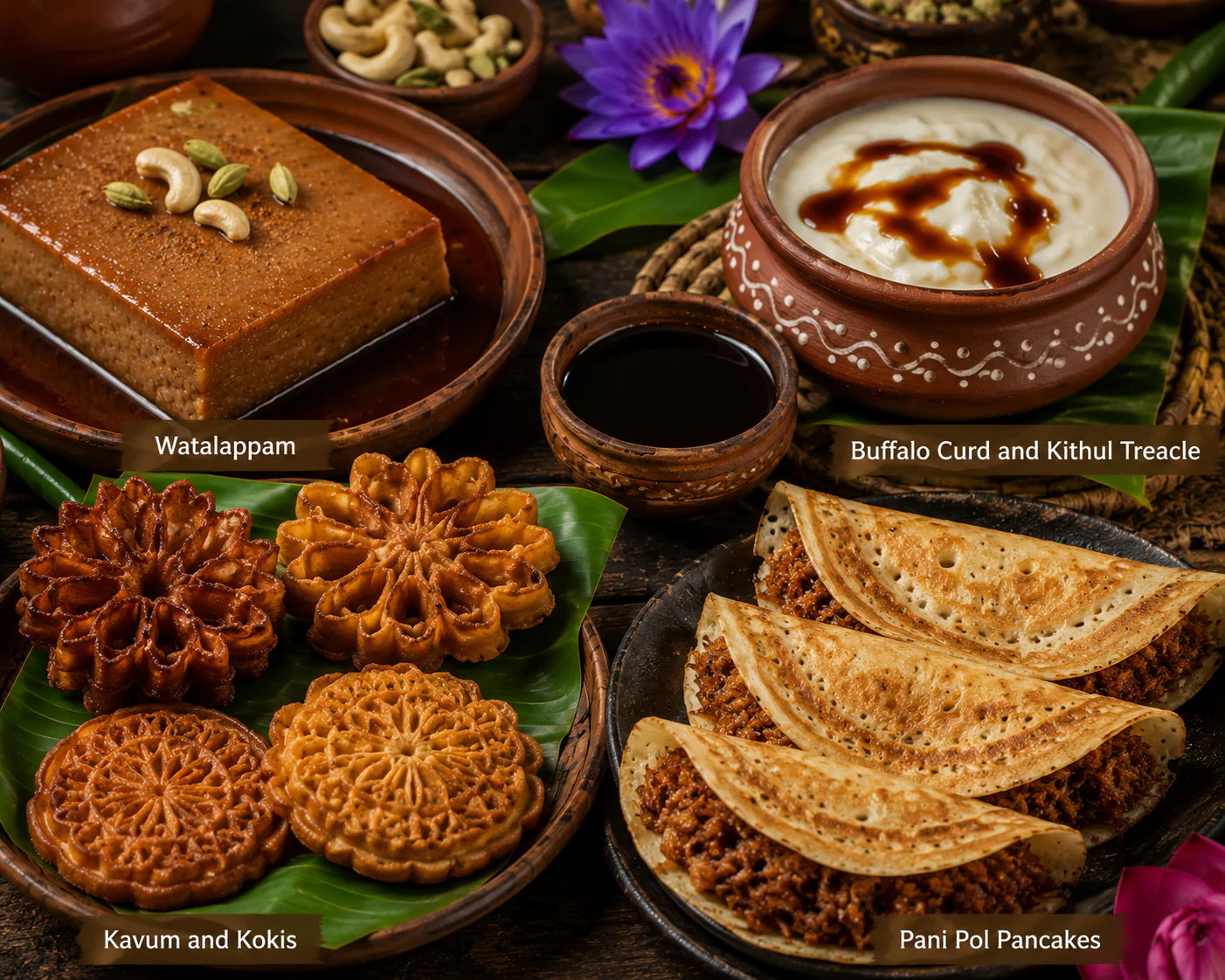
Watalappam
Watalappam is a rich coconut custard made with coconut milk, jaggery, eggs, cardamom,
nutmeg, and cashews. It is especially popular during celebrations.
Buffalo Curd and Kithul Treacle
Buffalo curd with kithul treacle is one of the most loved desserts in Sri Lanka. Thick buffalo curd
is served with sweet palm treacle, creating a simple but refreshing dessert.
Kavum and Kokis
Kavum and kokis are traditional sweetmeats commonly prepared during Sinhala and Tamil New
Year. They are made with rice flour, coconut milk, and treacle.
Pani Pol Pancakes
Pani pol pancakes are thin pancakes filled with sweet coconut and jaggery. They are soft,
sweet, and perfect with evening tea.
Ceylon Tea and Sri Lankan Tea Culture
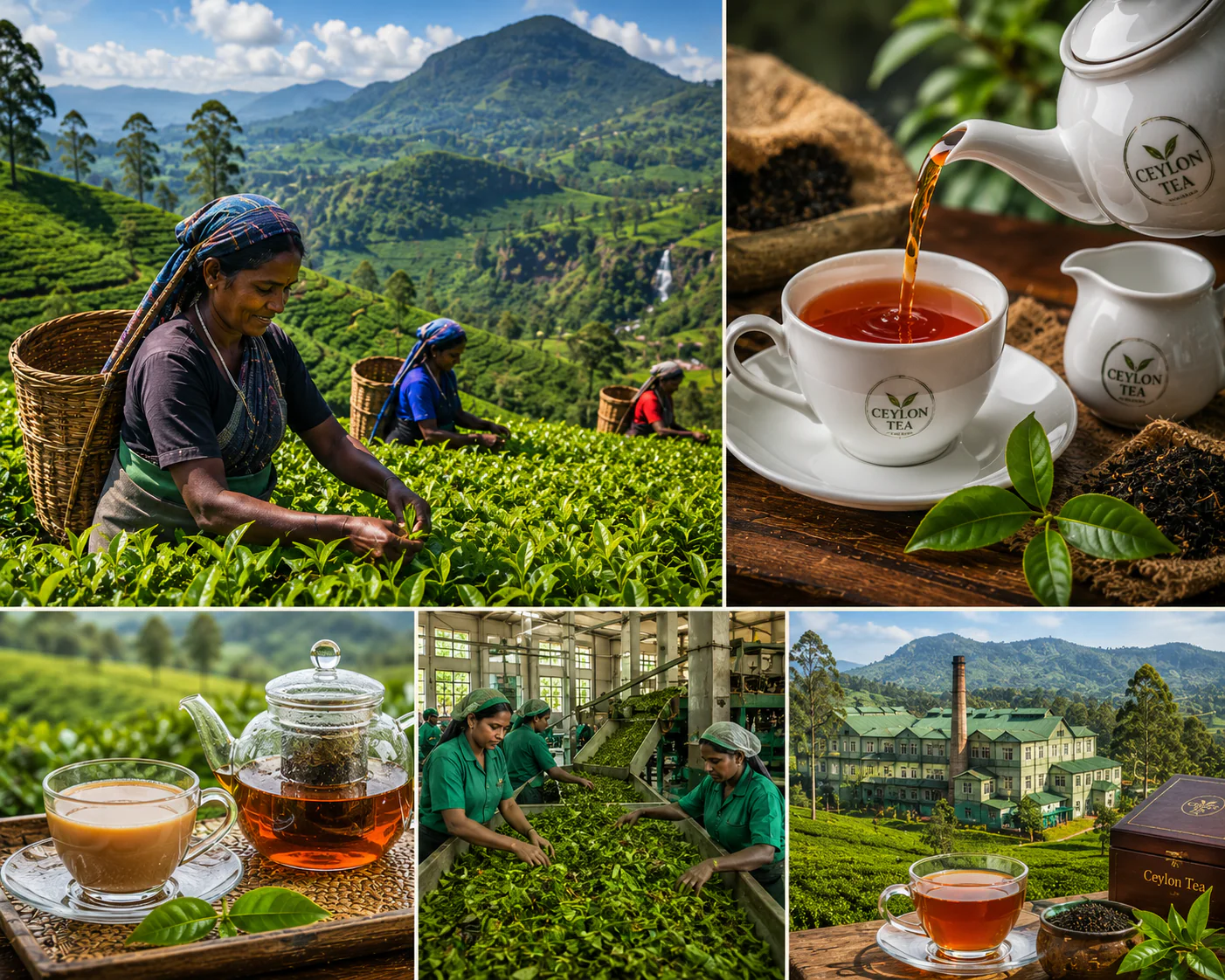
Sri Lankan gastronomy is not complete without Ceylon tea. Tea is a major part of Sri Lankan
daily life and hospitality. Whether you visit a local home, office, shop, or hotel, tea is often
offered as a warm welcome.
The hill country areas such as Nuwara Eliya, Ella, Hatton, and Kandy are famous for tea
plantations. Travelers can visit tea estates, walk through green tea fields, see tea factories, and
enjoy fresh tea tasting.
Tea tourism is one of the best experiences for visitors who love culture, nature, and history. A Sri
Lanka food tour becomes even more special when it includes a tea plantation visit.
Best Food Experiences for Travelers in Sri Lanka
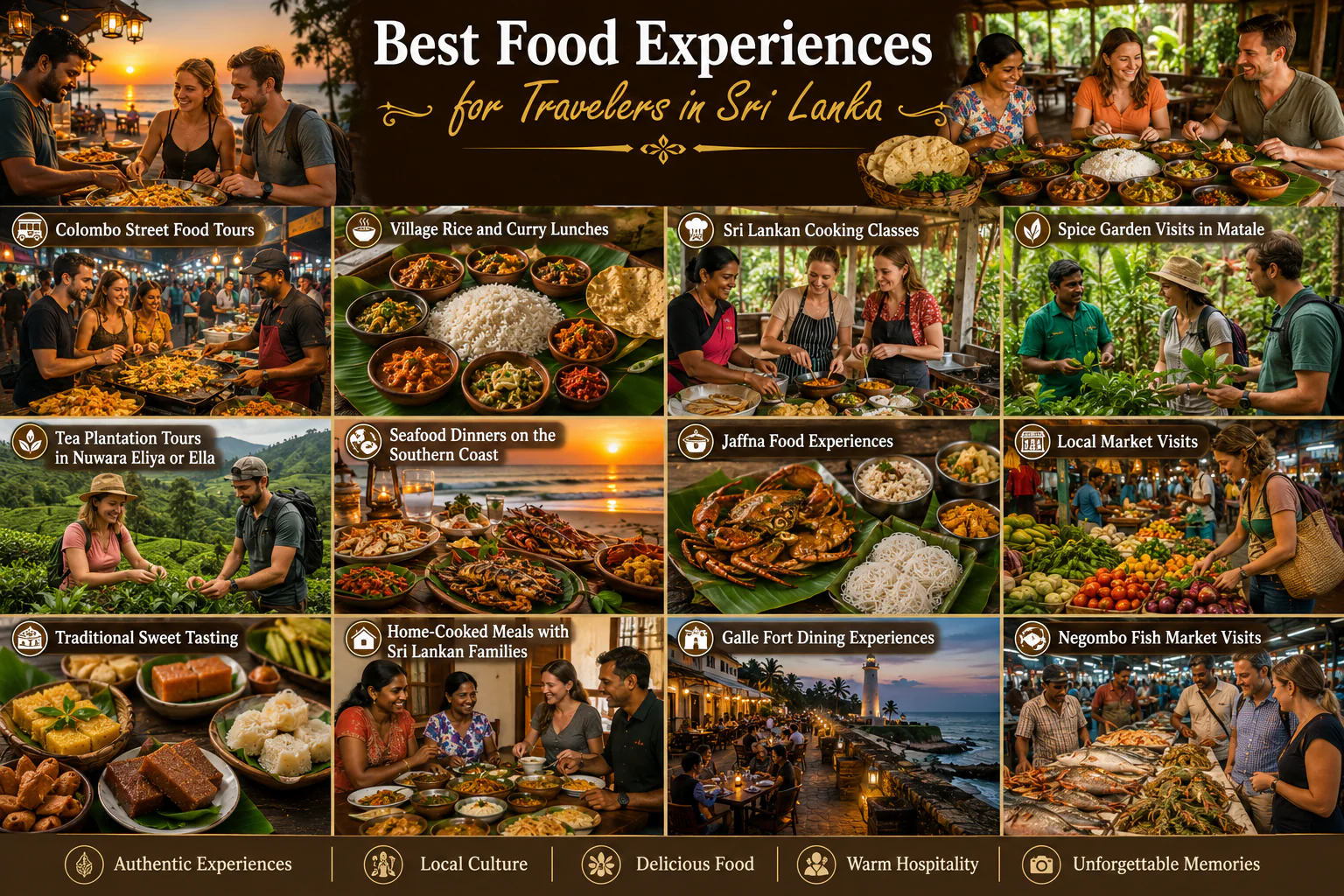
Travelers who want to experience Sri Lankan gastronomy should try more than restaurant
meals. Some of the best culinary experiences include Colombo street food tours, village rice
and curry lunches, Sri Lankan cooking classes, spice garden visits in Matale, tea plantation
tours in Nuwara Eliya or Ella, seafood dinners on the southern coast, Jaffna food experiences,
local market visits, traditional sweet tasting, home-cooked meals with Sri Lankan families, Galle
Fort dining experiences, and Negombo fish market visits.
These experiences help travelers understand the real culture behind the food. They are ideal for
families, couples, solo travelers, food lovers, photographers, and anyone who wants to
experience Sri Lanka in a more authentic way.
Why Sri Lankan Gastronomy Should Be Part of Your Travel Plan
Sri Lankan food gives travelers a deeper connection to the island. It is not only about taste. It is
about culture, people, history, and local lifestyle.
A food journey in Sri Lanka can take you from busy Colombo street food stalls to quiet village
kitchens, from fresh seafood restaurants on the coast to peaceful tea plantations in the
mountains. Every place offers a different flavor and a different story.
What makes Sri Lankan food truly unique is its beautiful mix of coconut, spices, rice, seafood,
tropical fruits, multicultural influences, and regional flavors. For families, couples, solo travelers,
food lovers, and culture seekers, Sri Lankan gastronomy is one of the most memorable parts of
a Sri Lanka holiday.
Conclusion
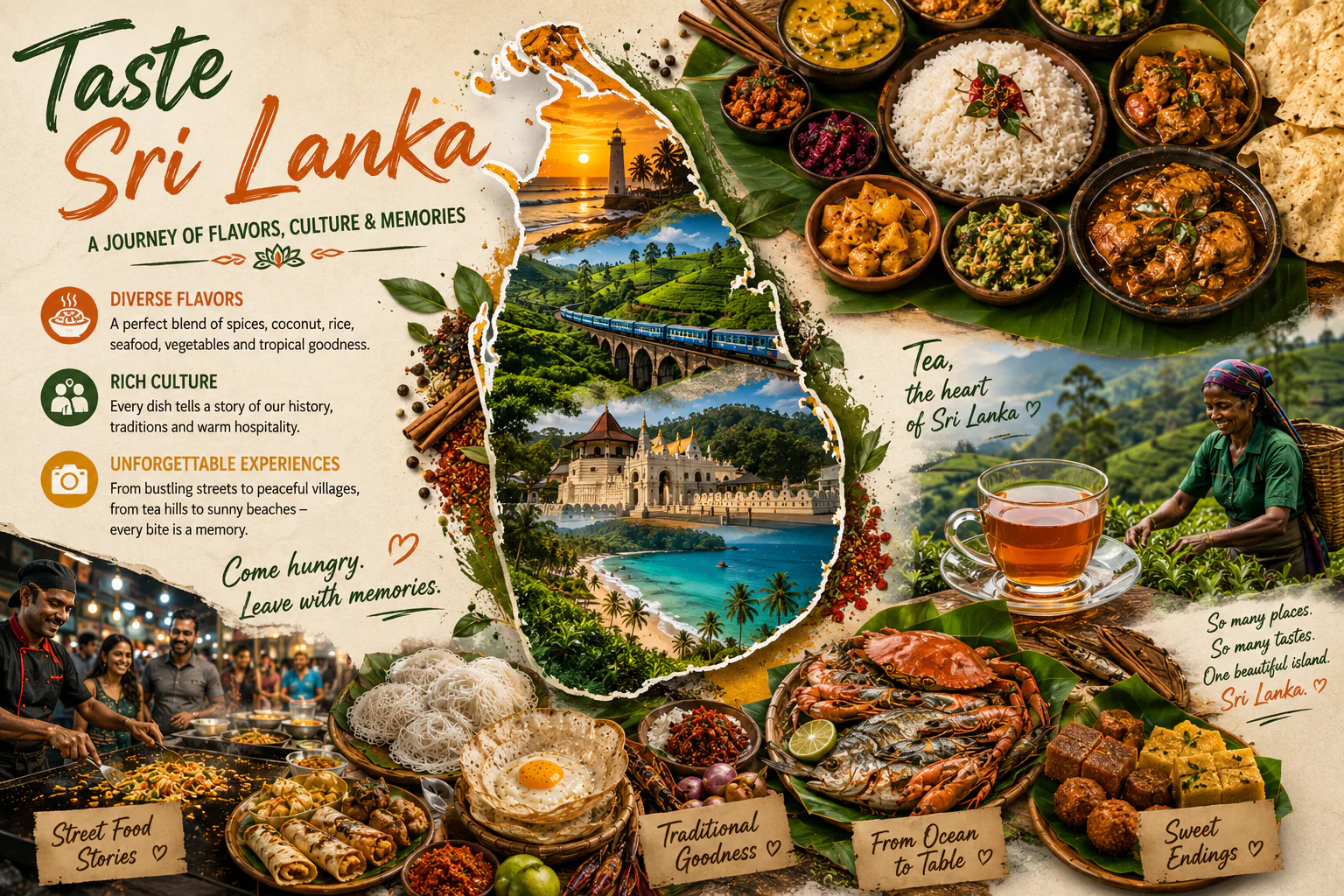
Sri Lankan gastronomy is a beautiful mix of spices, coconut, rice, seafood, sweets, tea, and
warm hospitality. From rice and curry to hoppers, kottu roti, pol sambol, watalappam, buffalo
curd, seafood curry, and Ceylon tea, every dish offers something special.
For travelers visiting Sri Lanka, food should not be treated as only a meal. It is part of the
journey. It is part of the culture. It is one of the best ways to understand the island and its
people.
Whether you join a cooking class, enjoy a village lunch, taste street food in Colombo, eat
seafood by the beach, or drink tea in the hill country, Sri Lankan gastronomy will leave you with
memories that stay long after the trip ends.